Storm Anesthesia Insight: Payer Caps, Home Respiratory Test, Dementia

Feb 20 / Michael Storm, DNAP, CRNA
Storm Anesthesia Newsletter - practical board prep and clinical pearls for nurse anesthesia trainees. The 2025 doctoral mandate is here, payer conflicts are heating up, and home COVID tests might miss what matters most.

In this issue
  • Board tip: What doctoral entry mean for your clinical expectations
  • High-yield: Anesthesia time-limit bans and your future salary
  • Clinical pearl: Home respiratory panel sensitivity you need to know
  • Ethics debate: Is 'therapeutic lying' ever appropriate in dementia care?
  • Get academic coaching to navigate the doctoral transition

Top Stories & Clinical Pearls
⭐ Doctoral Entry: Your New Baseline for Practice
Doctoral Entry: Your New Baseline for Practice
All newly graduating CRNAs must hold a doctoral degree by the end of 2025. This shift coincides with expanding practice authority in multiple states and a persistent anesthesia provider shortage reshaping contract negotiations. The biggest CRNA changes in 2025
Why this matters
  • Doctoral preparation raises clinical and leadership expectations for all new graduates
  • Practice authority expansion means more autonomous decision-making responsibility
  • Provider shortages increase your negotiating power but also workload demands
Key Takeaway: Your doctoral degree signals readiness for higher clinical autonomy. Prepare your leadership and evidence-based practice skills accordingly.
Action Step: Review the AANA's 2025 practice authority map and identify which states align with your career goals. Time: 15 minutes.
⭐ State Laws vs. Payer Caps: A Salary Tug-of-War
State Laws vs. Payer Caps: A Salary Tug-of-War
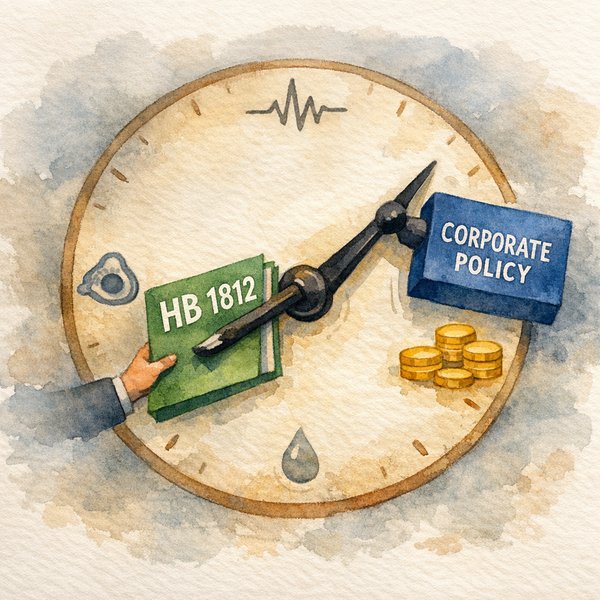
Washington state has reintroduced HB 1812 to ban anesthesia time-limit reimbursement caps, following Maryland and Illinois. Meanwhile, Anthem is calculating allowable time using CMS work values rather than actual documented time. Anesthesia time limit bans in 2026: 3 notes
Why this matters
  • State protections and payer policies are creating conflicting rules for anesthesia groups
  • Anthem's policy affects providers in Missouri, New York, and Connecticut
  • Revenue instability from these caps can directly impact group salaries and benefits
Key Takeaway: Ask potential employers how they handle time-limit reimbursement caps before signing a contract.
Action Step: During job interviews, ask: 'How does your group manage payer time-limit policies?' Document their responses for comparison.
⭐ Home Respiratory Tests: Know the Sensitivity Gap
Home Respiratory Tests: Know the Sensitivity Gap
The FDA approved the first over-the-counter home test for RSV, COVID-19, and Influenza A/B. While specificity exceeds 99.8%, antigen-based sensitivity ranges from 91.6% to 94.1%, meaning false negatives can occur in symptomatic patients. Home Test for Respiratory Viruses No Substitute for Office Visit
Why this matters
  • A negative home test does not rule out infection in a symptomatic patient
  • False negatives risk delayed treatment and viral spread in clinical settings
  • Pediatric and immunocompromised patients need extra scrutiny in preoperative screening
Key Takeaway: A negative home test plus active symptoms should prompt clinical-grade PCR confirmation before proceeding with elective cases.
Action Step: Add this question to your preoperative checklist: 'Have you taken a home respiratory test? What were your symptoms?' Time: 5 minutes to update your template.
🌶️ Spicy Take: Therapeutic Lying in Dementia: Compassion or Deception?
A viral nursing discussion questions whether reorienting dementia patients to painful realities serves them. Many clinicians argue that validation therapy preserves emotional safety when cognitive retention is impossible.
  • Traditional 'honesty always' approaches may cause repeated trauma in advanced dementia
  • Validation therapy focuses on emotional truth rather than factual accuracy
  • Counterpoint: Some ethicists argue patient autonomy requires truthful communication when possible
Key Takeaway: Consider psychological safety alongside factual accuracy when communicating with cognitively impaired patients.
Quick Hits & Tools
PRNs: 'Available,' Not 'Due'
Reframe PRN medications as 'available when needed' rather than 'due' to manage patient expectations and reduce administration conflicts.
Avoid Diagnostic Closure
When initial treatment fails, reopen your differential. Persistent symptoms despite a diagnosis should trigger renewed investigation, not dismissal.
KCU Launches CAA Program
Kansas City University welcomed its first Certified Anesthesiologist Assistant class, expanding the anesthesia care team model into new regions.
Upgrade Your Clinical Vocabulary
Use precise terms like 'pruritus' and 'idiopathic' in documentation to improve clarity and professional credibility in your charting.
UK Nursing Satisfaction Crisis
Only 12% of UK nurses would recommend their profession due to workload and harassment. This global trend reinforces why wellness strategies matter for all providers.
Navigate Your Doctoral Transition
With doctoral mandates now in effect, academic coaching can help you balance clinical demands with your scholarly project. Get personalized support for this critical career phase.
  • One-on-one coaching tailored to SRNAs and residents
  • Expert help managing doctoral-level projects
  • Strategies for maintaining wellness under clinical pressure
Start Your Coaching