Storm Anesthesia Insight Welcome

Feb 12 / Michael Storm, DNAP, CRNA

Storm Anesthesia Newsletter - Board-ready pearls and OR habits you can use this week.
This issue links big professional shifts to day-to-day OR performance. You will get a quick read on the 2025 doctorate change, workforce pressure, and a simple Time Out speak-up script.

In this issue
  • Turn 2025 education and scope changes into smarter job questions
  • Use one Time Out line to surface real risk
  • Read the shortage as local reality, not a headline
  • Use RAAS to answer hypotension and perfusion questions faster
  • Catch silent autoimmune clues during a busy preop
  • Build a weekly board-prep routine that survives call
Top Stories & Clinical Pearls
⭐ 2025 CRNA shifts you should plan for
2025 CRNA shifts you should plan for
A Becker's ASC Review roundup says doctoral entry is now in effect for new CRNA graduates. It also notes state scope changes and a controversial 15% UnitedHealthcare reimbursement cut tied to independent CRNA billing. The biggest CRNA changes in 2025
Why this matters
  • Board prep: Know supervision, scope language, and policy basics.
  • Career risk: Payer changes can affect compensation and contracts.
  • Clinic reality: Facility bylaws can limit what state law allows.
Key Takeaway: Plan jobs around real-world scope and payer rules, not assumptions.
Action Step: Pick one state you might practice in and one setting (hospital or ASC). Read the scope language, then ask interviews about autonomy, call burden, and payer mix exposure.
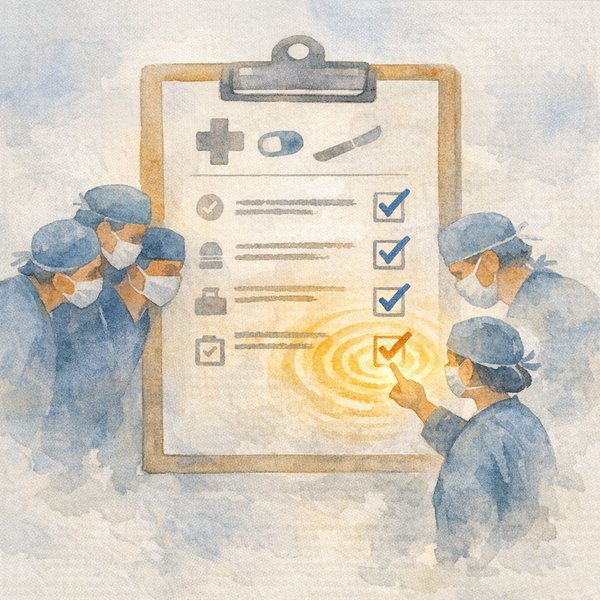
⭐ Upgrade your Time Out with one question
Upgrade your Time Out with one question
A KevinMD piece argues surgical safety checklists fail when teams treat them like a script. Hierarchy and stress can keep people quiet, so teams need psychological safety so concerns surface before incision. The surgical safety checklist: Why silence is the real enemy
Why this matters
  • Patient safety: Time Out is your last shared plan before incision.
  • Board prep: Human factors and communication show up on safety items.
  • Teaching point: Closed-loop communication reduces missed risks.
Key Takeaway: Use Time Out to name the top risk and confirm the plan out loud.
Action Step: Choose one speak-up line before your next case. Try: “I’m concerned about the airway or positioning, can we pause for 10 seconds?” Use it during the Time Out.
⭐ The “shortage” is also a systems problem
The “shortage” is also a systems problem
Becker's ASC Review describes a supply-demand gap where surgical volume rises faster than clinicians can be replaced. The piece argues that solutions include better distribution and system efficiency, not only graduating more clinicians. What would it mean to ‘overcome’ the anesthesia shortage?
Why this matters
  • Job planning: Shortages are regional and can change call and autonomy.
  • Training reality: Rapid program growth can tighten clinical site access.
  • Safety risk: Thin staffing raises the need for early escalation.
Key Takeaway: High demand can improve job options while also raising workload and fatigue risk.
Action Step: Sanity check: List three regions you might work in. For each, write one question on staffing, call expectations, and backup for airway, hemorrhage, or delayed emergence.
🌶️ Spicy Take: Hot take: “average plus rest” wins long term
A viral thread debates hustle culture in medical training versus doing solid work with real recovery. The argument says steady effort and outside life can support a safer, longer career than nonstop resume building.
  • Fatigue hurts attention and working memory, and that impacts OR safety.
  • Spaced repetition often beats cramming for long-term recall.
  • Short sprints can work if you set clear stop rules.
Key Takeaway: Pick a study pace you can repeat for months, then protect sleep like a clinical skill.
The moment the dream gets nerfeddddddd • 719 upvotes, 134 comments
Quick Hits & Tools
RAAS: turn hypotension into a test answer
Quick win: Use renin-angiotensin-aldosterone system (RAAS) to predict heart rate, systemic vascular resistance (SVR), urine output, and potassium changes in low-flow states.
SRNA interviews: sell judgment and teamwork
Action step: Bring two ICU stories that show decisions, communication, and coachability, then record a 2-minute answer and cut filler words.
Silent celiac: add it to your preop radar
Risk: Celiac disease can present with brain fog and anxiety without GI symptoms, so look for malabsorption clues in history and labs when the story feels off.
Phased retirement means more handoffs
Educator note: More per-diem and phased-retirement schedules can increase handoffs, so use a short supervision handoff checklist when preceptors rotate during SRNA cases.
CAA growth: know the local practice model
Client-facing note: Kansas City University started an anesthesiologist assistant program, so be ready to explain Anesthesia Care Team language and local supervision models in interviews.
Start your board-prep plan today
After reading about the 2025 doctorate shift and ongoing staffing strain, keep prep simple and repeatable. A structured plan helps you stay consistent even during heavy clinical weeks.
  • Easy, simple review process
  • Focused high-yield board topics
  • Study smarter for doctoral standards
Start Your Prep