
Lateral Decubitus Positioning
Prone Positioning
This position is used for a variety of spine procedures, posterior fossa access, procedures of the buttocks and perirectal area as well as the lower extremities. Preoperative assessment of head, neck, shoulder, and arm mobility for positioning is very important to identify any limitations.
Use of horseshoe head rest, three-point skull fixation, or foam cushions for head stabilization.
If conscious sedation have patient position self on operating room (OR) table, then administer sedation.
Use of horseshoe head rest, three-point skull fixation, or foam cushions for head stabilization.
If conscious sedation have patient position self on operating room (OR) table, then administer sedation.
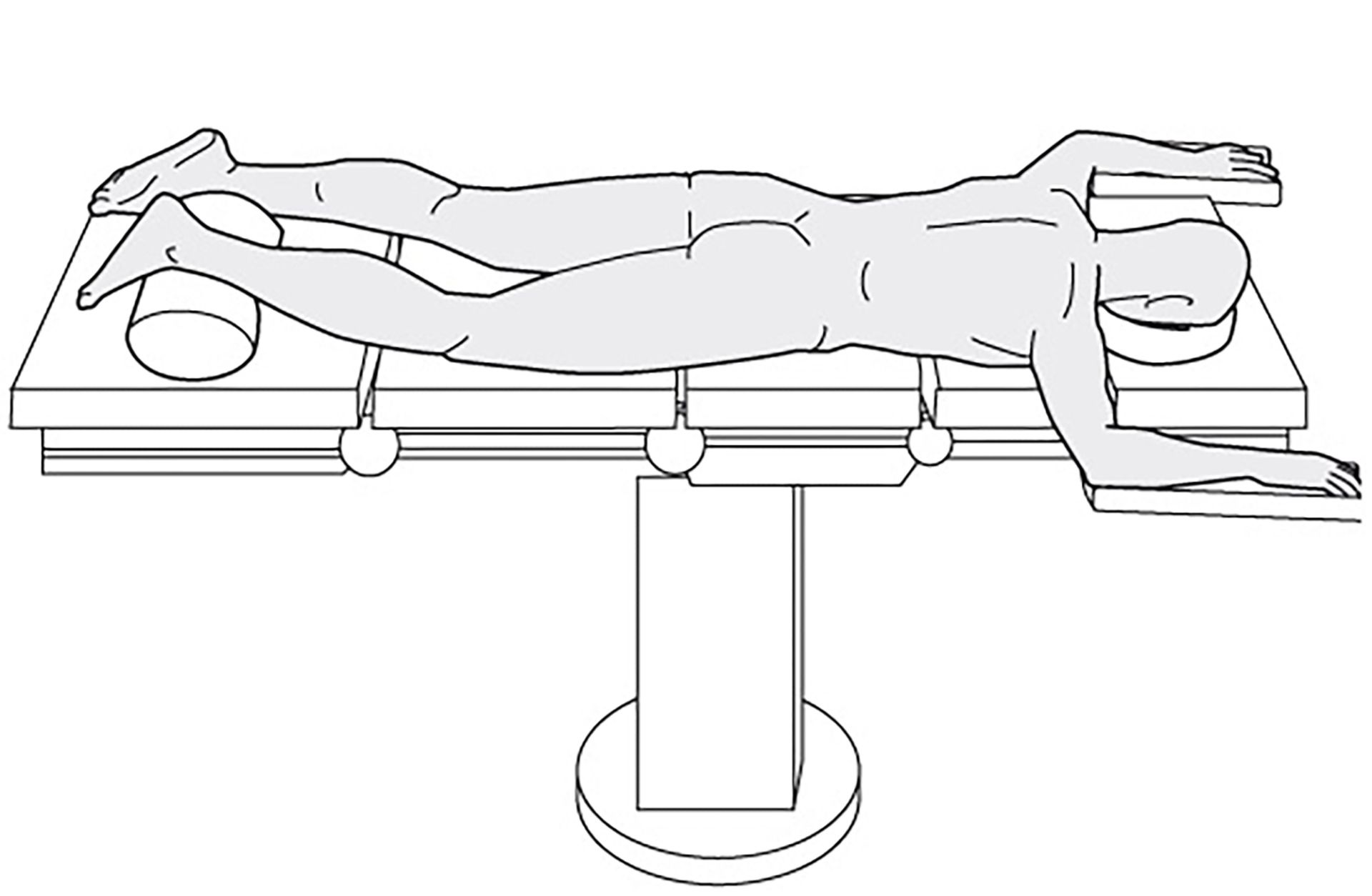
Pressure points to be padded
Torso typically supported on a frame or with rolls from shoulder to iliac crest or crosswise at pelvis and shoulders.
Lower legs supported with pillows.
Upper extremities either tucked along body, or on arm boards with arms flexed at shoulder and elbow, hands pronated (protects the Ulnar nerve). Be mindful of iv access and lines prior to tucking arms and possible turning the OR table.
Pad pressure points at elbows, knees, ankles, and genitalia.
Ensure limited pressure on nipples and breasts placed medial to the bolsters.
Lower legs supported with pillows.
Upper extremities either tucked along body, or on arm boards with arms flexed at shoulder and elbow, hands pronated (protects the Ulnar nerve). Be mindful of iv access and lines prior to tucking arms and possible turning the OR table.
Pad pressure points at elbows, knees, ankles, and genitalia.
Ensure limited pressure on nipples and breasts placed medial to the bolsters.
Anesthetic considerations

Storm Anesthesia | ProgramPrep is dedicated to providing high-touch academic support, personalized coaching, and holistic preparation for nurse anesthesia residents.
Through evidence-driven didactic instruction, mental wellness integration, and individualized performance strategies, we enable residents to optimize learning and successfully transition into practice.
Through evidence-driven didactic instruction, mental wellness integration, and individualized performance strategies, we enable residents to optimize learning and successfully transition into practice.